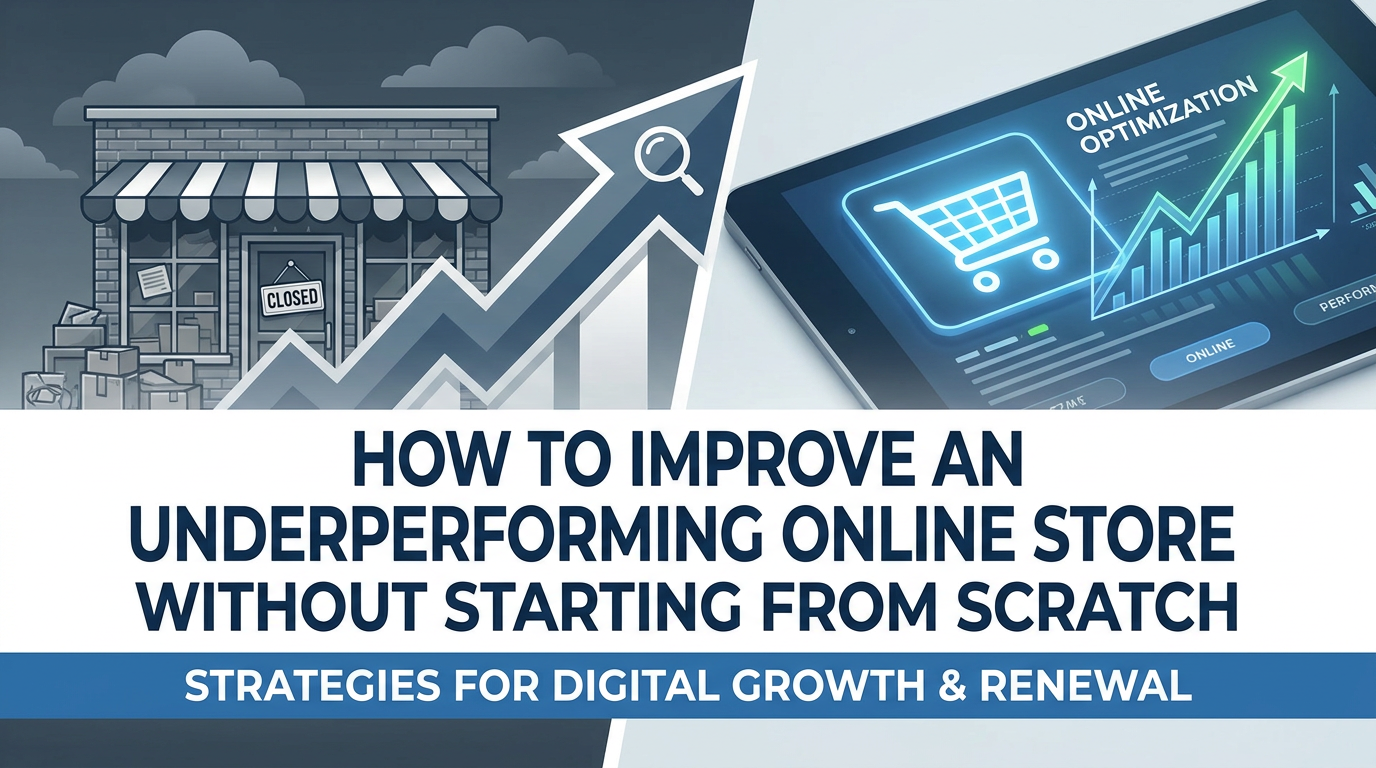
When the Store Exists But the Results Do Not
Many businesses launch an online store and expect it to generate sales. When it does not, the instinct is often to start over — new platform, new design, new everything. But in most cases, the problem is not the platform. It is specific, fixable issues in how the store is set up and operated.
Rebuilding from scratch is expensive and time-consuming. Before going down that path, it is worth diagnosing what is actually broken and fixing those issues first.
Start With the Data
Before changing anything, look at what the numbers tell you. If you have analytics installed (and if you do not, that is the first thing to fix), answer these questions: Where are visitors coming from? Which pages do they land on? Where do they drop off? What is the cart abandonment rate? How does mobile traffic compare to desktop?
These numbers point to specific problems. High traffic but low conversions usually means a checkout or trust issue. Low traffic means a visibility or marketing issue. High bounce rates on product pages suggest a presentation or relevance problem.
Common Problems and How to Fix Them
Slow Page Speed
This is one of the most damaging and most fixable issues. If your store takes more than three seconds to load, you are losing customers before they see a single product. Common culprits include unoptimized images, too many plugins or scripts, poor hosting, and bloated themes.
The fix: compress images, remove unnecessary plugins, upgrade hosting if needed, and test with tools like Google PageSpeed Insights to identify specific bottlenecks.
Poor Mobile Experience
More than half of eCommerce traffic comes from mobile devices. If your store is not optimized for mobile — cramped layouts, tiny buttons, difficult navigation, slow load times — you are effectively turning away the majority of your potential customers.
Test your store on an actual phone, not just a desktop browser resized. The checkout flow in particular must work smoothly on mobile.
Checkout Friction
Every unnecessary step, field, or distraction in the checkout process costs you sales. Common friction points include requiring account creation before purchase, too many form fields, unclear shipping costs revealed late in the process, and limited payment options.
The fix: enable guest checkout, reduce form fields to the essentials, show shipping costs early, and offer multiple payment methods.
Weak Product Pages
Product pages are where the buying decision happens. If they have small or low-quality images, vague descriptions, missing specifications, or no social proof (reviews, ratings), they are not doing their job.
Strong product pages have clear, high-quality images from multiple angles, descriptions that answer common buyer questions, visible pricing, trust signals (reviews, return policy), and a prominent add-to-cart button.
Poor Category and Navigation Structure
If customers cannot find what they are looking for within a few clicks, they leave. Overly complex navigation, unclear category names, and missing search functionality all contribute to this problem.
Simplify your navigation, use clear category labels that match how customers think about your products, and make sure your search function works well.
Missing Trust Signals
First-time visitors need reasons to trust your store before they hand over payment details. Missing trust signals include no visible return policy, no contact information, no SSL certificate, no customer reviews, and an unprofessional design.
These are straightforward to fix and have an outsized impact on conversion rates.
When a Rebuild Is Actually Necessary
Sometimes the problems are deep enough that fixing them individually costs more than starting fresh. This is usually the case when the platform itself cannot support the functionality you need, when the codebase is so customized that updates break things, or when the site architecture fundamentally does not match your business model.
But even then, the rebuild should be informed by the specific problems you identified — not a guess that something new will automatically be better.
Getting Professional Help
If your store is underperforming and you are not sure where to start, a structured audit can identify the highest-impact improvements. This is more cost-effective than guessing or rebuilding blindly.
Explore our eCommerce Development services or contact us to discuss how we can help improve your store's performance.
Need help with this topic?
Intec Infosys can help you with practical solutions tailored to your business needs.
Contact Us